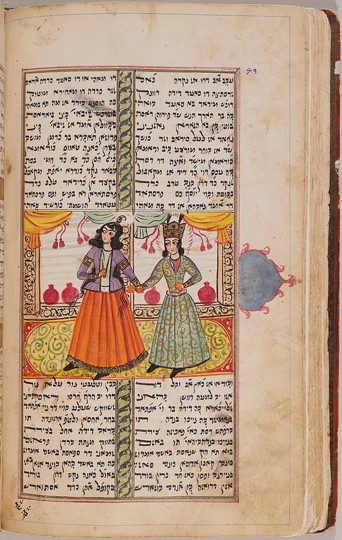
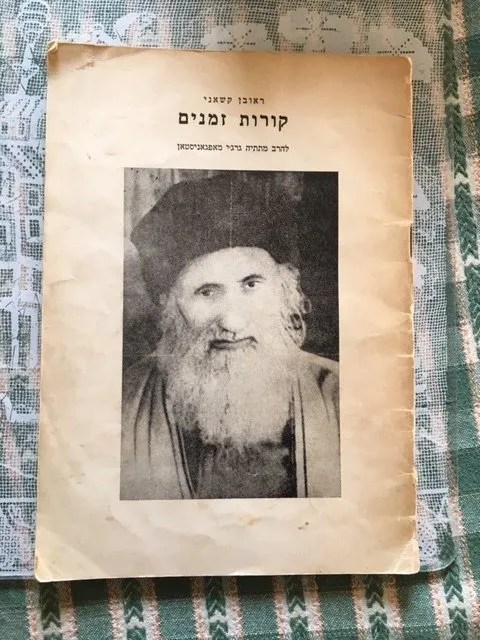
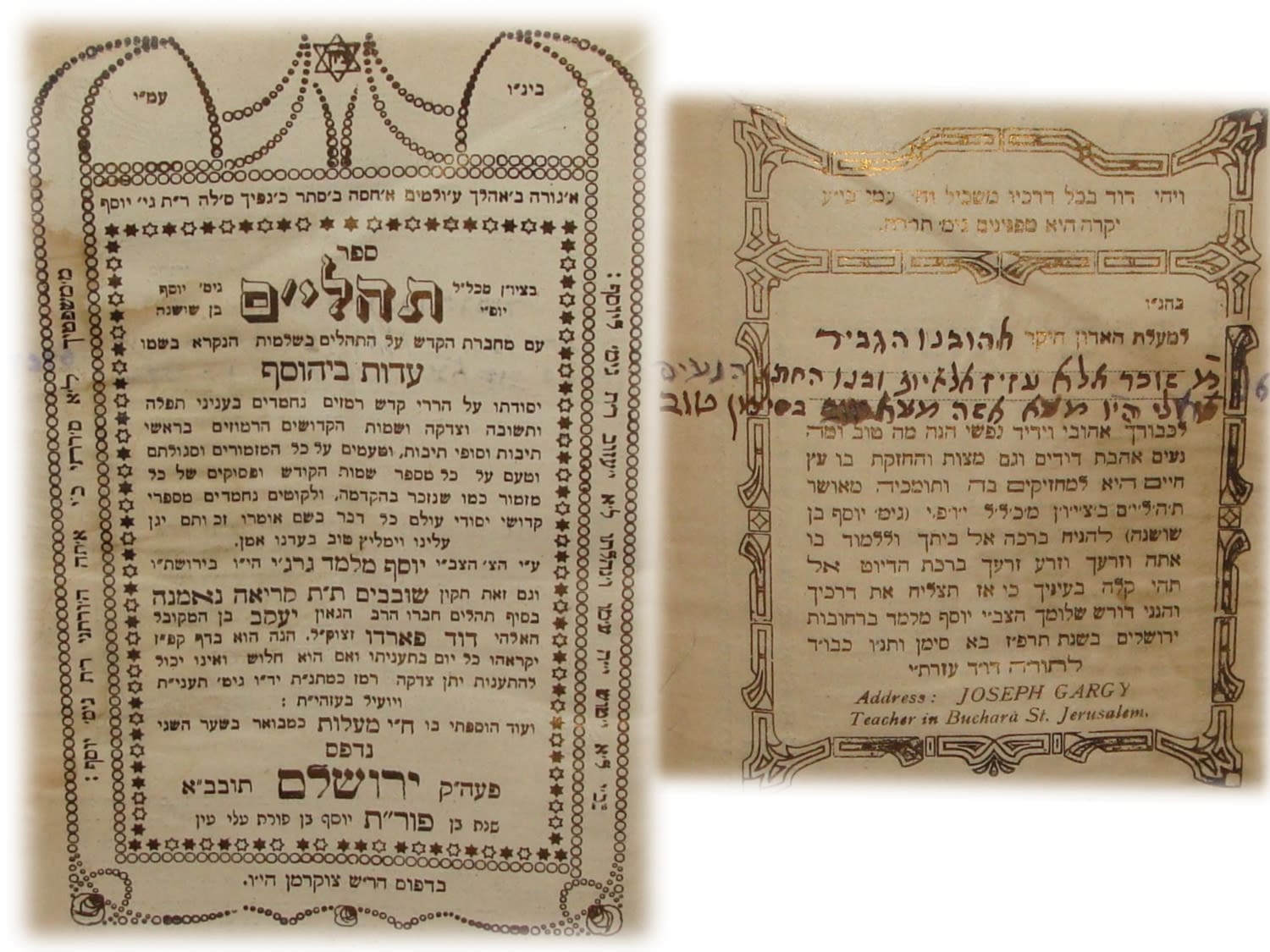
The Judeo-Persian copy of “Yousef and Zulaikha” by Eliyahu ben Nissan ben Eliyah, known as “Garji”, was completed in Mashhad in 1853. The Garji family might have originally been from Georgia (Garji meaning Georgian in Persian), and possibly settled in Iran already under Shah Abbas in the 17th century. From the region near the Caspian Sea where people spoke Gilaki, some Jewish families moved to Mashhad in 1746 as part of Nadir Shah’s resettlement policies. The Garjis were probably among them, since descendants of the family spoke Gilaki until a generation ago. After moving from Mashhad to Herat in the mid 19th century, the Garjis acted as prominent rabbis and teachers, including for the Persian speaking Jewish communities in Marv (now Turkmenistan). As a hereditary position, they also worked as shochets (slaughtering according to the law) and mohels (performing circumcision) for many generations. The chronicle Korot Zmanim by Mattatya Garji contains descriptions about life in Herat, as well as about his travels to Jerusalem in 1895 and 1898, after which he eventually settled there. Mattatya’s sons and grandsons continued to work as teachers and rabbis both in Herat and in Jerusalem. The last members of the Garji family left Herat only in the second half of the 20th century. In the course of this research, an interview with members of the Garji family was conducted in Israel in summer 2024.
 Persian Jews