The biblical books of Esther, Isiah, Ezra, Daniel and Nehemiah refer to Jewish life in ancient Iran, pointing to a continuous Jewish presence since at least the time of Cyrus the Great (Cyrus II of Persia, d. 530 BCE). Cyrus, who led the Achaemenid conquest of the Neo-Babylonian Empire, is today hailed among many Iranian Jews as the benevolent king who freed the Jews from Babylonian captivity.
With the arrival of Islam in Persia in 636 CE, Jews became a recognized minority (People of the Book) under Muslim dominion. During the first three centuries of Islam, the Jews of Babylonia and Iran formed the largest body of the entire Jewish Diaspora. Vera Moreen states that the earlier stages of medieval Jewish life in Iran cannot be easily disconnected from Jewish life in the Omayyad (661-750 CE) and ʿAbbasid (750-1258 CE) caliphates, and Jewish life in “Babylonia” (today Syria/Iraq) thus also reflected, directly and indirectly, on life in Iran. The high degree of religious autonomy enjoyed by Iranian Jews in pre-Islamic Iran continued under Muslim domination as well. The Babylonian exilarch, or raʿs-al-jālut (head of the Jews), was the nominal leader of the eastern Jewish communities, while the prestigious sages of the academies (yeshivot) of Sura, Pumbedita, and, increasingly after the 10th century, Baghdad dominated their spiritual lives throughout the gaonic era (ca. 7th-11th cent.). However, there were already different strands among these communities, as a story from the Babylonian Talmud from the fourth century AD refers to a member of the religious academy in Pumbedita, who travelled to Marv at the border of Turkmenistan and Iran. He was hosted by the local Jewish community there, when disputes about ritual cleanliness arose. This suggests that local liturgical and halakhical differences existed between Jews in (Greater) Khorasan and Babylonian Jews (Zand 1990), which over time became standardized by the religious authorities from Babylonia.
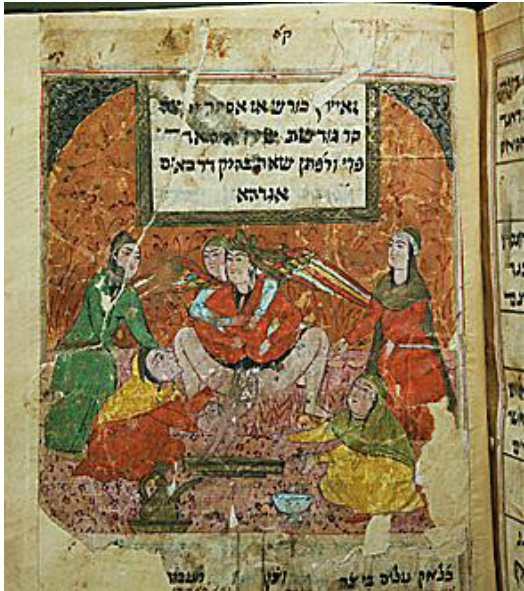
The picture on the left is an illustration from the poet Shahin’s Ardashir-Nameh, compiled in 1333. It shows Queen Esther giving birth to Cyrus. The manuscript is part of the Judeo-Persian collection of The Jewish Theological Seminary of America, New York (JTS 40919 [8270]). See also Orit Carmeli’s article: https://www.irannamag.com/en/article/4598/
For literature about Jews in Iran in different historical periods please see:
Adler, N. Elkan. ‘The Persian Jews: Their Books and Their Ritual.’ The Jewish Quarterly Review 10, no. 4 (1898): 584–625.
Amanat, Abbas, and Farzin Vejdani, eds. ‘Identity among the Jews of Iran’. In Iran Facing Others: Identity Boundaries in a Historical Perspective, 219–42. New York: Palgrave Macmillan, 2012.
Amanat, Mehrdad. Jewish Identities in Iran: Resistance and Conversion to Islam and the Baha’i Faith. Library of Modern Religion 9. London: I.B. Tauris, 2011.
Delshad, Farshid. ‘Jewish Karaite Movement and Its Iranian Roots’. ORIENTALISTICS (blog), 14 December 2017.
Fischel, Walter J. ‘The Jews in Medieval Iran from the 16th to the 18th Centuries: Political, Economic, and Communal Aspects’. In Irano-Judaica, edited by Shaked Shaked, 265–91. Jerusalem, 1982.
Gil, Moshe. Jews in Islamic Countries in the Middle Ages. Translated by David Strassler. Etudes Sur Le Judaïsme Médiéval 28. Leiden: Brill, 2004.
Herman, Geoffrey, ed. Jews, Christians, and Zoroastrians: Religious Dynamics in a Sasanian Context. Judaism in Context 17. Piscataway: Gorgias Press, 2014.
Levy, Ḥabīb. Comprehensive History of the Jews of Iran: The Outset of the Diaspora. Edited by Hooshang Ebrami. Translated by George W. Maschke. Costa Mesa, CA: Mazda Publishers in association with the Cultural Foundation of Habib Levy, 1999.
Moreen, Vera Basch. ‘The Status of Religious Minorities in Safavid Iran 1617-61’. Journal of Near Eastern Studies 40, no. 2 (1981): 119–34.
Sarshar, Houman, ed. Esther’s Children: A Portrait of Iranian Jews. Beverly Hills, Calif.: Center for Iranian Jewish Oral History; Jewish Publication Society, 2002.
Sarshar, Houman, ed. Jewish Communities of Iran: Entries on Judeo-Persian Communities Published by the Encyclopedia Iranica. Encyclopaedia Iranica Extracts – EIE. New York: Encyclopedia Iranica Foundation, 2011.
Sarshar, Houman, ed. The Jews of Iran: The History, Religion and Culture of a Community in the Islamic World. International Library of Iranian Studies. London: I.B. Tauris, 2014.
Shaked, Shaul. ‘Iranian Influence on Judaism: First Century B.C.E. to Second Century C.E.’ In The Cambridge History of Judaism, edited by W. D. Davies and Louis Finkelstein, 1:308–25. Cambridge: Cambridge University Press, 1984.
Sternfeld, Lior B. Between Iran and Zion: Jewish Histories of Twentieth-Century Iran. Stanford, California: Stanford University Press, 2019.
Tsadik, Daniel. Between Foreigners and Shi’is: Nineteenth-Century Iran and Its Jewish Minority. Stanford Studies in Jewish History and Culture. Stanford: Stanford University Press, 2007.
Tsadik, Daniel. ‘Jews in the Pre-Constitutional Years: The Shiraz Incident of 1905’. Iranian Studies 43, no. 2 (2010): 239–63.
Tsadik, Daniel. ‘Jews of Iran and Rabbinical Literature: Preliminary Notes’. AJS Perspectives, The Iran & Iraq Issue (2010): 14–16.
Tsadik, Daniel. ‘Nineteenth Century Shi’I Anti-Christian Polemics and the Jewish Aramaic Nevuat Ha-Yeled [The Prophecy of the Child]’. Iranian Studies 1, no. 37 (2004): 5–15.
Tsadik, Daniel. ‘Religious Disputations of Imāmī Shī’īs against Judaism in the Late Eighteenth and Nineteenth Centuries’. Studia Iranica 34, no. 1 (2005): 95–134.
Tsadik, Daniel. Judeo-Persian Communities. v. Qajar Period (1786-1925)’. In Encyclopædia Iranica, edited by Ehsan Yarshater, XV, Fasc. 1:108–12. New York: Routledge & Kegan Paul, 2009.
Tsadik, Daniel. ‘The Legal Status of Religious Minorities: Imāmī Shī’ī Law and Iran’s Constitutional Revolution’. Islamic Law and Society 10, no. 3 (2003): 376–408.
Yeroushalmi, David. The Jews of Iran: Chapters in Their History and Cultural Heritage. Bibliotheca Iranica : Judeo-Iranian and Jewish Studies Series 4. Costa Mesa, California: Mazda Publishers, 2017.
Yeroushalmi, David, and Kathleen Abraham, eds. Light and Shadows: The Story of Iranian Jews. Los Angeles; Tel Aviv: Fowler Museum at UCLA; Beit Hatfutsot, the Museum of the Jewish People, 2012.
For food see: https://ajammc.com/2023/12/10/iranian-jewish-cookbook-diaspora/, for links mainly regarding Judeo-Persian language: https://shervinfarridnejad.wordpress.com/irano-judaica/judeo-persian/), and art: https://www.iranicaonline.org/articles/judeo-persian-xi-1-a-general-survey-of-persian-jewish-music/?utm.
Booklet on Persian Jewish liturgical music (in Persian) by Parvaneh Sarraf: https://www.7dorim.com/wp-content/uploads/2021/03/pavanesarf.pdf?utm
Today, there is a community of about 10-15.000 Jews left in the cities of Tehran, Isfahan, Shiraz and Yazd. Below are some pictures of the recent renovation of the Ezra Yaghoob synagogue in the old Jewish quarter of Tehran (Oudlajan):
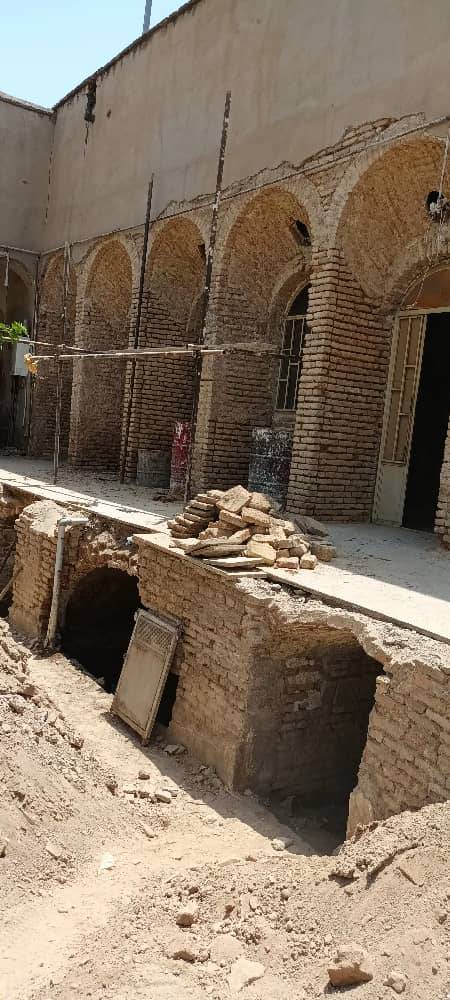
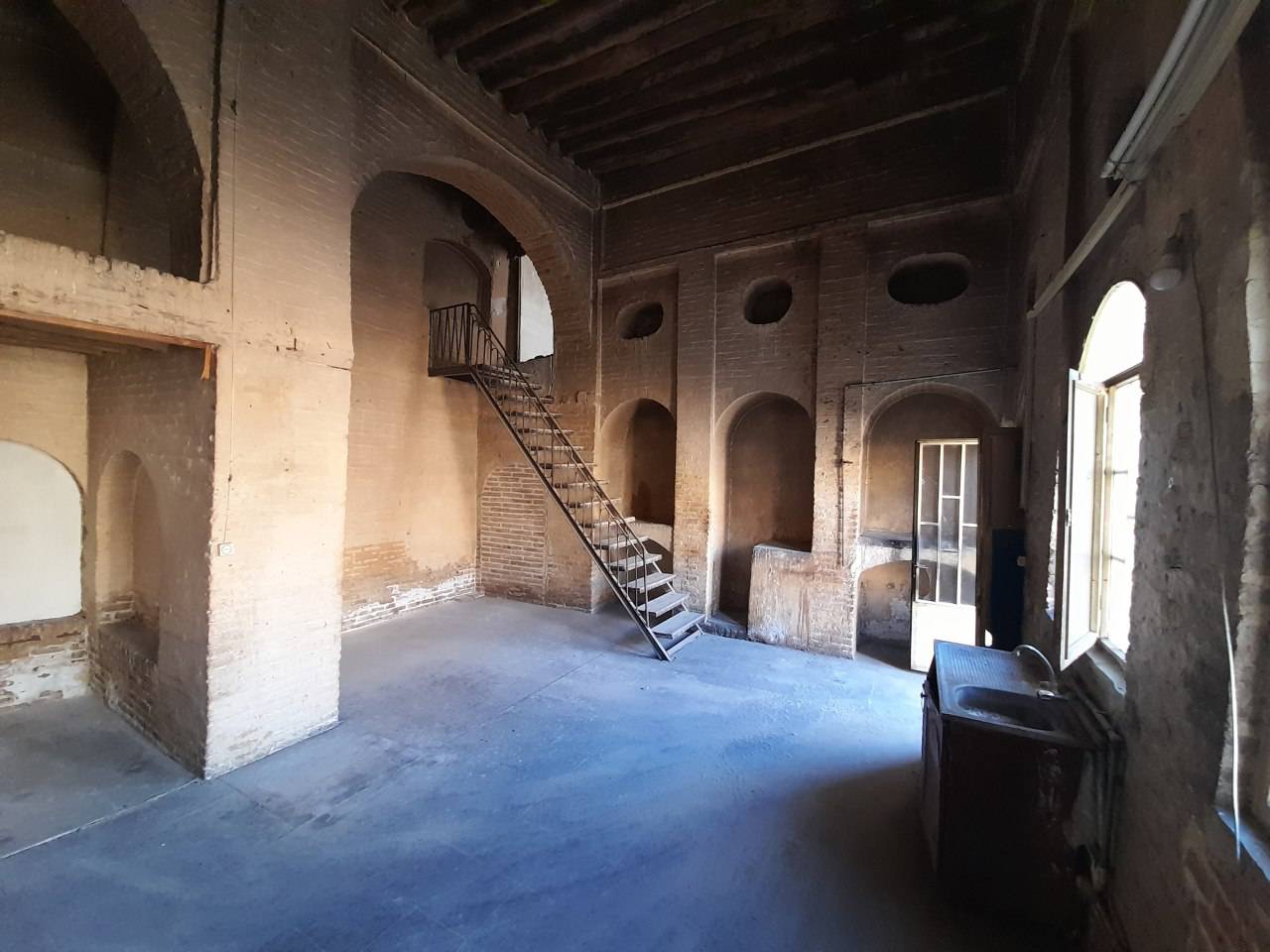
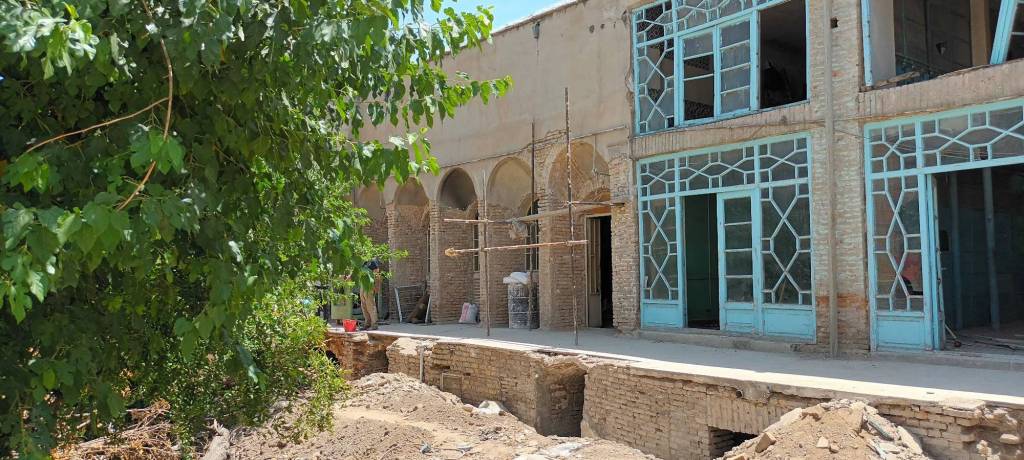
Pictures courtesy of Marjan Yashayaie (2025)
 Persian Jews