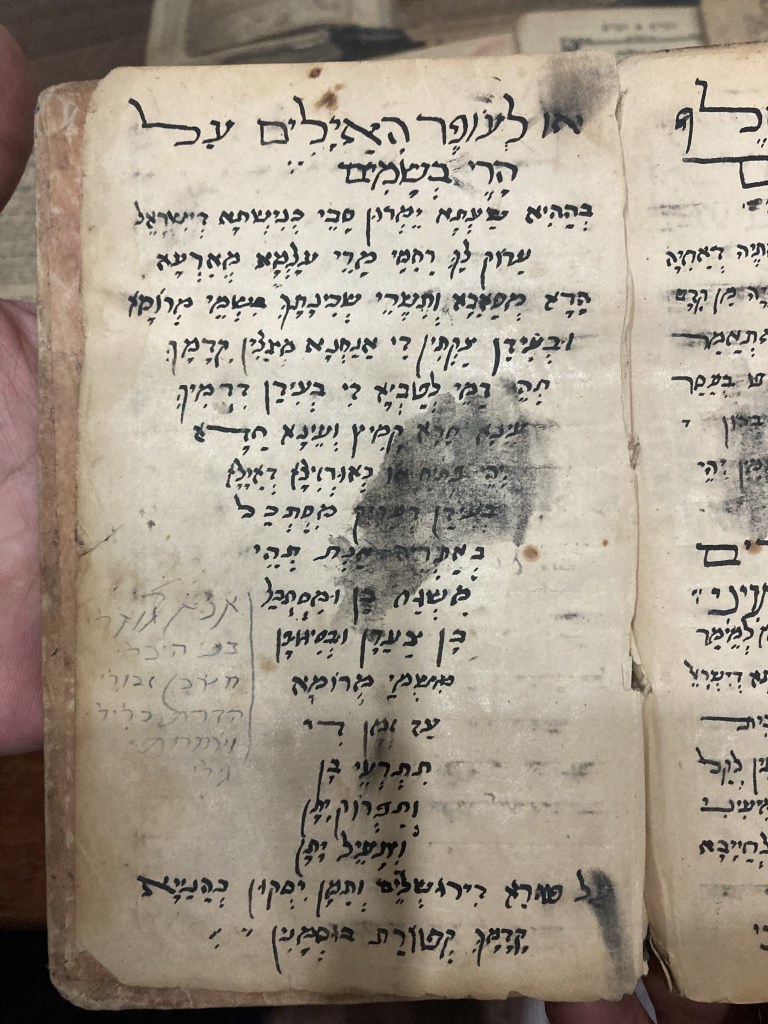
Large picture above:
Song of Songs 8:14
Hebrew:
אוֹ לְעֹפֶר הָאַיָּלִים עַל הָרֵי בְשָׂמִים
Aramaic Targum:
בְּהַהִיא שָׁעֲתָא יֵימְרוּן סָבֵי כְּנִשְׁתָּא דְּיִשְׂרָאֵל עֲרוֹק לָךְ רְחִימִי מָרֵי עָלְמָא מֵאַרְעָא הָדָא מְסָאַבְתָּא וְתַשְׁרֵי שְׁכִינְתָךְ בִּשְׁמֵי מְרוֹמָא וּבְעִדָּן עָקְתַן דַּאֲנַחְנָא מְצַלַּן קֳדָמָךְ תְּהֵי דָּמֵי לְטָבְיָא דִּבְעִדָּן דְּדָמֵיךְ עֵינָא חֲדָא קְמִיץ וְעֵינָא חֲדָא פְּתִיחַ אוֹ כְאוּרְזֵילָא דְּאַיָּלָא דִּבְעִדָּן דְּעָרֵיק מִסְתַּכַּל בָּתְרֵיהּ כֵּן אַנְתְּ תְּהֵי מַשְׁגַּח בָּן וּמִסְתַּכַּל בְּצַעֲרָן וּבְסִגּוּפָן מִשְּׁמֵי מְרוֹמָא עַד זְמָן דְּתִתְרְעֵי בָּן וְתִפְרוֹק יָתָן וְתָעֵיל יָתָן עַל טוּרָא דִּירוּשְׁלֵם וְתַמָּן יִסְקוּן כָּהֲנַיָּא קֳדָמָךְ קְטוֹרֶת בּוּסְמָנִין:
Translation:
“In that hour the elders of the Assembly of Israel will say, ‘Flee, my Beloved, Lord of the world, from this polluted earth, and let your Presence dwell in heaven above. But in times of trouble, when we pray to you, be like a gazelle which sleeps with one eye closed and one eye open, or like an antelope fawn which looks behind as it runs away. Just so, look on us and regard our pain and affliction from heaven above, until the time when you will be pleased with us and redeem us and bring us up to the mountains of Jerusalem and there the priests will burn before you the incense of spices.”
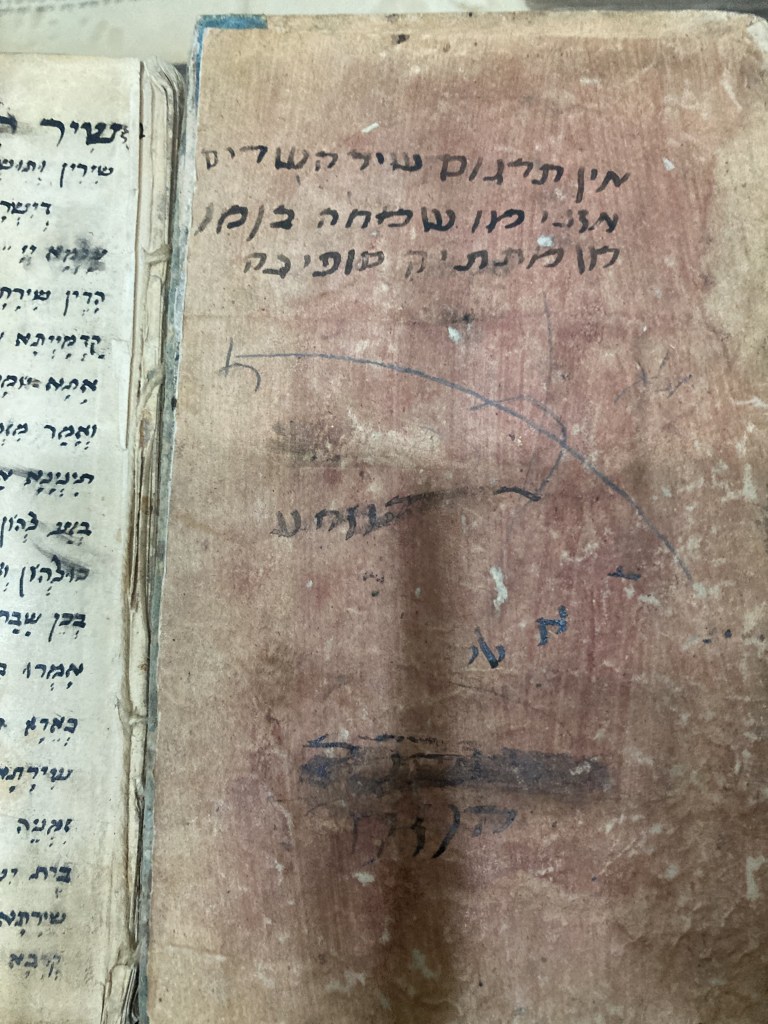
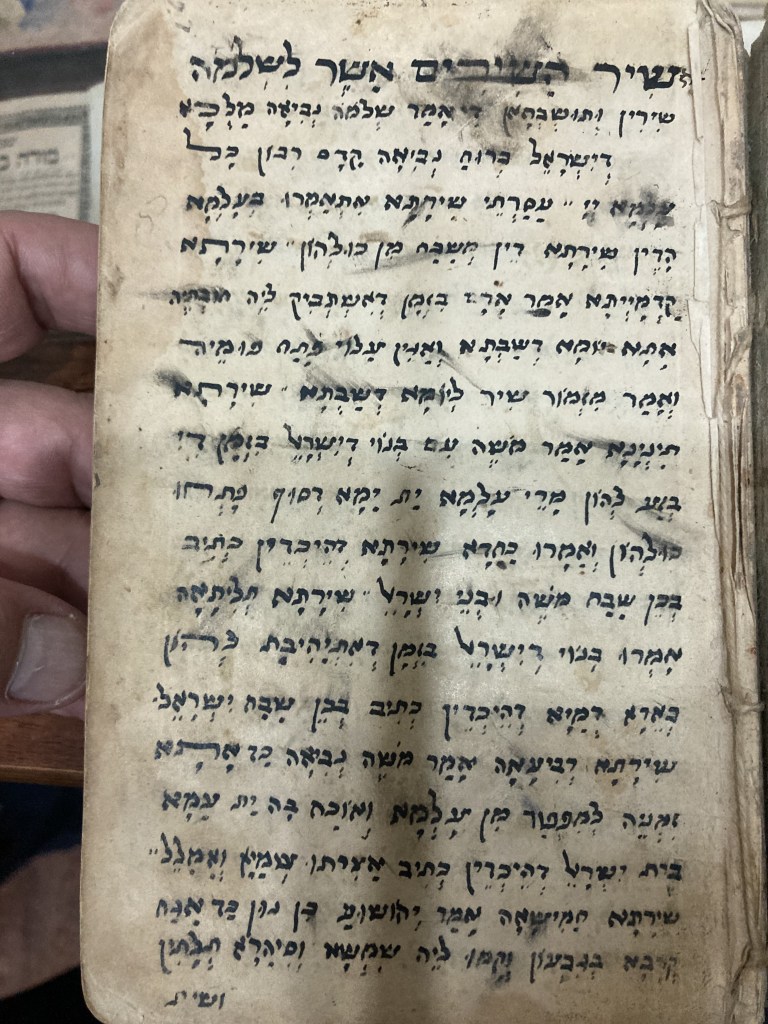
Courtesy of Beit Menachem synagogue, Tashkent
(Translation: I. Shafiei; Photos A. Sadjed, 2023)
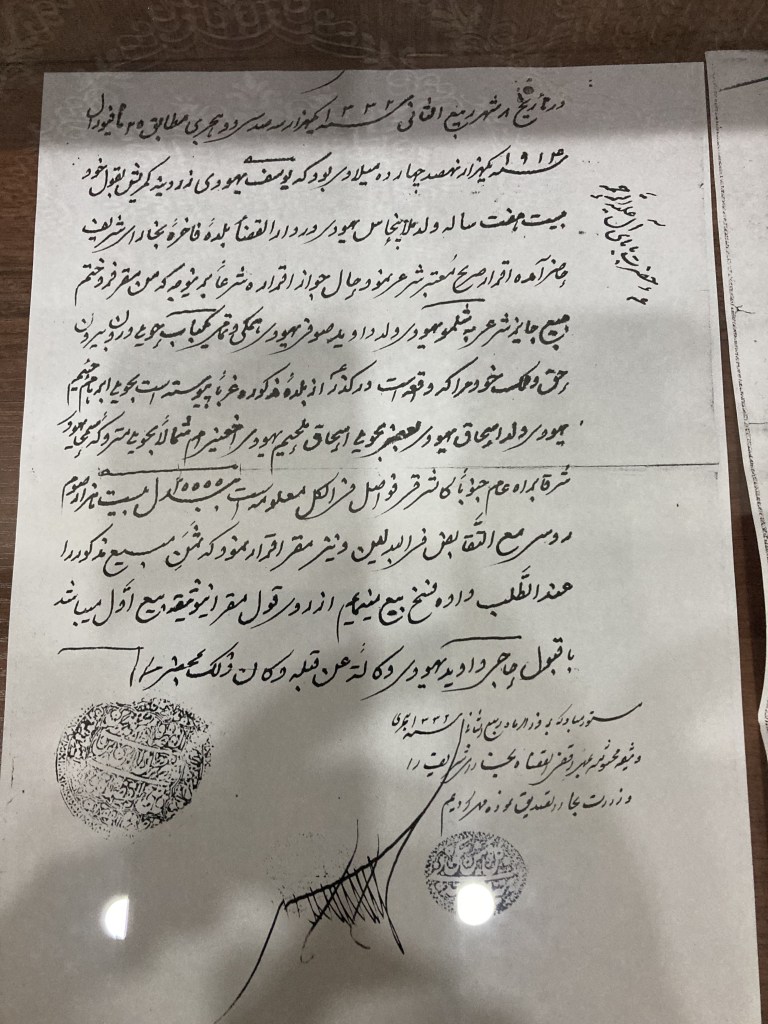
Turki & Russian:
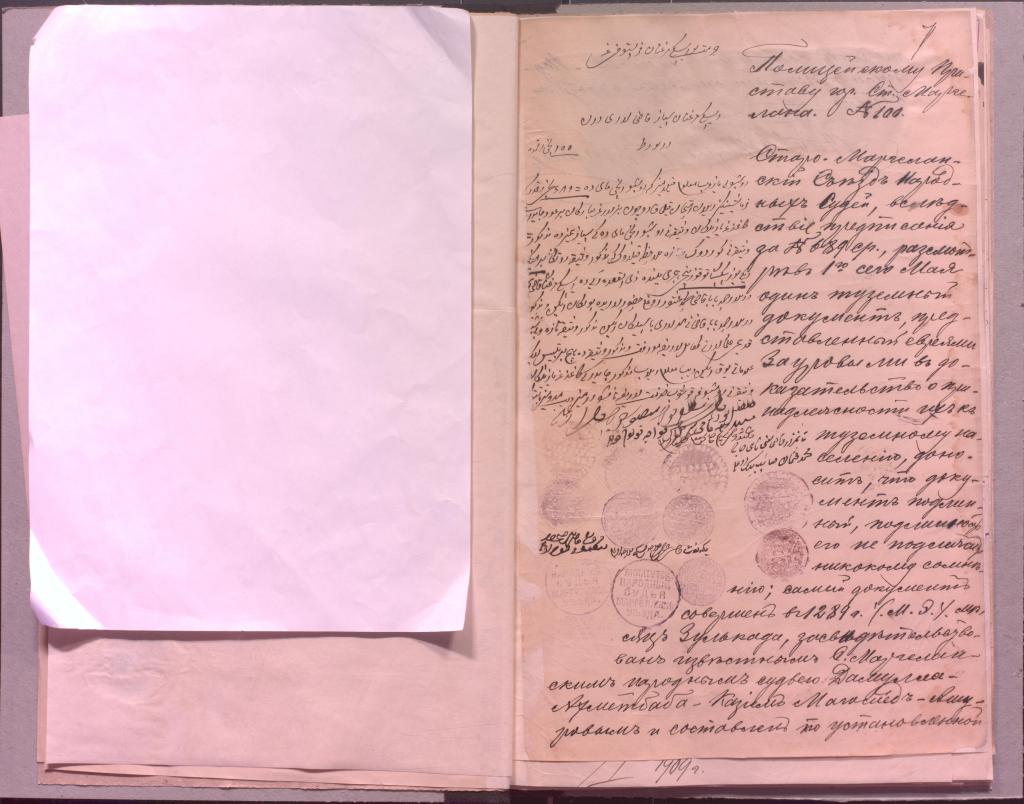
The text in Turki reads:
“To the respectable chief of police [pristav] of Old Marghilon
From the assembly of judges of Old Marghilon
We declare in writing that: at our meeting on 1 May, pursuant to your order no. 689, we have inspected the document [was̱īqa] written in … , which had been delivered to us for examination. We have observed that the the document was written in the month of Ẕū’l-Qaʿda of the year 1289, in the presence of the qāżī of Old Marghilan, Dāmlā Aḥmad Bābā Qāżī, son of Muḥammad ʿĀshūr, and the seal of the aforementioned qāżī Dāmlā Aḥmad Bābā Qāżī has been impressed on it. The document is clear[ly readable], is undoubtedly consistent with the authentic [documents produced] by the ʿulamā of the time, and shows no sign whatsoever of forgery. Having declared this, we have enclosed the document written in the aforementioned location to the present [letter] and have authenticated [ourselves] to you by impressing our seals.”
The Russian text reads: “The Indigenous Judicial Council of Old Marghilon, having, pursuant to order 689, examined on 1 May the indigenous document presented by the Zaurov Jews as proof that they belong to the [local] indigenous population, declares that the document is genuine, and that its authenticity is completely beyond doubt; said document was produced in the year 1289 A.H. in the month of Ẕū’l-Qaʿda, and was authenticated by the well-known judge of Marghilon Damulla [sic] Akhmetbaba-Kazi Magomed-Ashurov, and produced [according to] the prescribed …”
Document courtesy of Ruben Pinchasov. Translation: Guglielmo Zucconi (2025)
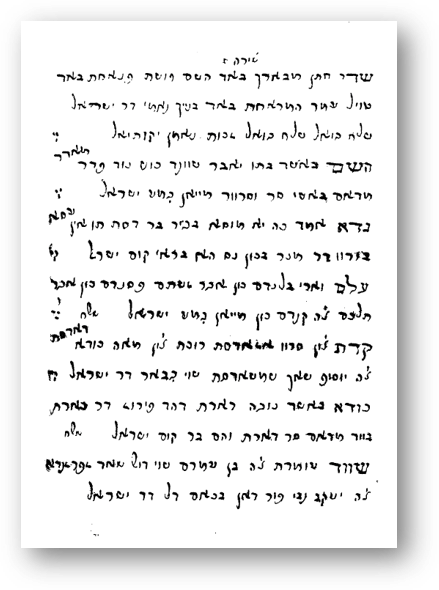
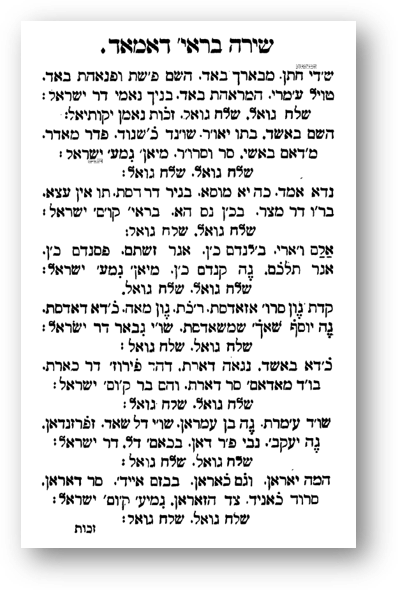
Shira baraye Hatan in Judeo-Persian. Cf. Sarah Soroudi, “Shirā-ye Ḥātāni: A Judeo-Persian Wedding Song,” in Shaul Shaked, ed., Irano-Judaica I, Jerusalem, 1982, pp. 204-64
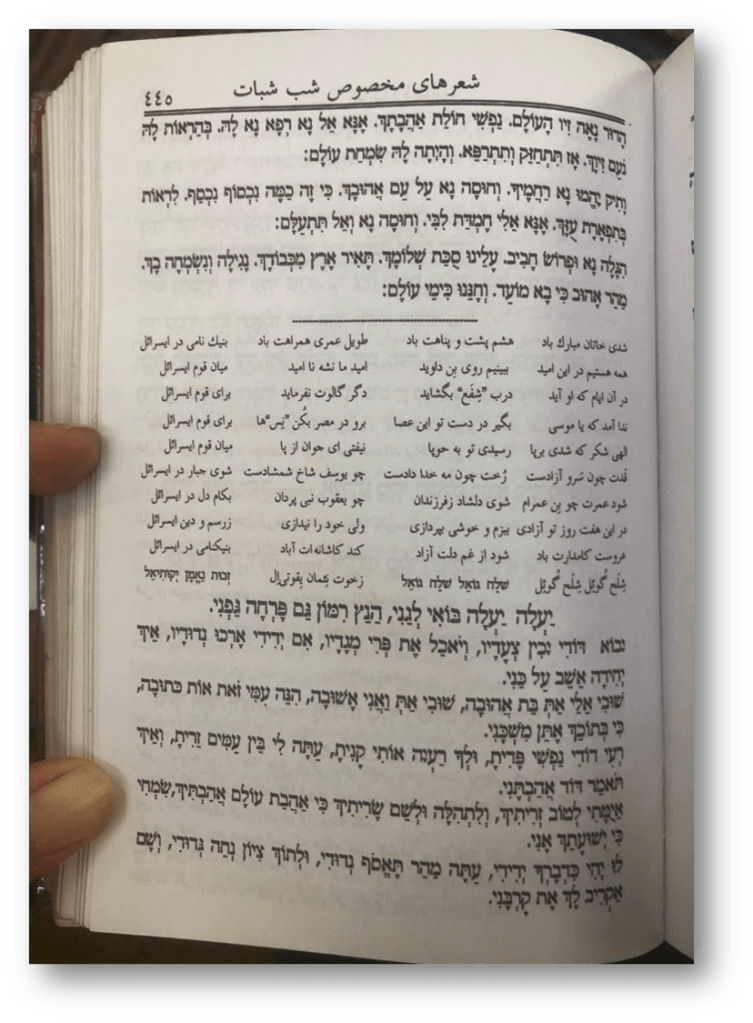
Haggadah for Passover, printed in Tehran, March 1962.
The Hebrew text is accompanied by Persian translations. One section is in Judeo-Persian:
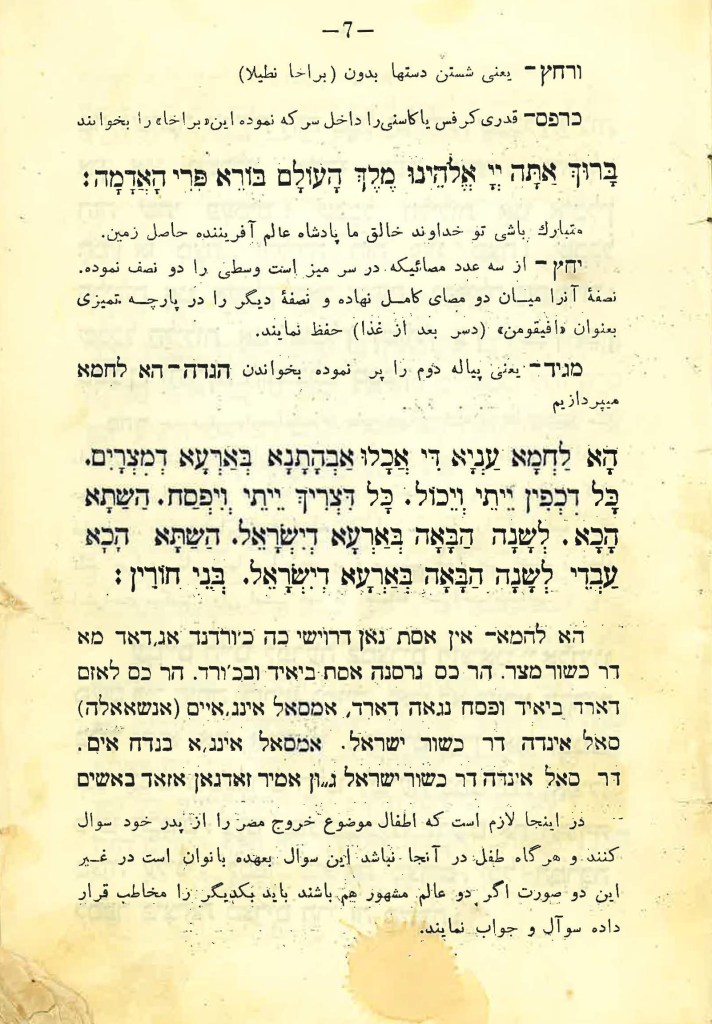
The Judeo-Persian paragraph is the translation of Ha Lachma Anya, printed below the Hebrew. The JP text reads:
In ast nân-e daridgi ke ajdâd-e mâ dar arz-e Mesr khordand.
Har kas gorosne ast, biyâyad va bokhorad.
Har kas niyâz dârad, biyâyad va Pesach râ negah dârad.
Emsâl injâ-im; (inshâ’Allâh) sâl-e âyande dar keshvar-e Yisrâ’el.
Emsâl injâ-im, bande-im. Dar sâl-e âyande dar keshvar-e Yisrâ’el amir zâdegân âzâd bâshim.
 Persian Jews